
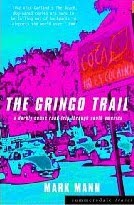
 I approached The Gringo Trail with no expectations other than to be mildly entertained and a little informed. Its strap line is ‘A darkly comic road trip through South America’ so I don’t think I was expecting too much with my hopes of entertainment and information.
Unlike some of the other travel books I’ve read, this one was staying in one continent rather than covering the whole (ish) World, and I have to admit I was looking for some more indepth South American travel experiences, seeing as South America is number one on the travelling ‘to do list’ for me.
The book reads remarkably easily – in fact, it almost appears to be a novel rather than a collection of personal experiences. Maybe that’s why it works so well; there is a story to be told that realistically could be the basis of a novel, and Mark spins the tale with a narrative backdrop which explains some history, politics and cultural insights to South America.
The great thing about these sections was that they were in italics – so had I wanted to skip any, they would have been very easy to identify 🙂
Unlike some of the other books I’ve read lately (particularly the Ryanair trip ones and On the Couch), this time it was startlingly obvious that the writer did not set out on the journey with the intention of writing about it afterwards. I hadn’t really noticed it at the time I read the other books, but this made a real difference to my enjoyment of this book, and also of the delight in discovering a well written book that isn’t actually written by a journalist or by a seasoned travel writer.
The other striking thing about The Gringo Trail was the lack of planning during the actual trip, and it made me long to hit the road in the way of my dreams – without a ridiculous time limit of one, two or even three weeks, but to be able to spend 2 minutes or two months in a single place as the mood takes you. Mark probably did plan – but the book wasn’t littered with the details where they did not contribute to the story.
The drugs. I can’t really write about this book without a mention of the drugs. They made it real. They made it dangerous. They made it different. They gave it a dark energy. Mark’s hallucinations are captured on the paper as if the reader was experiencing them for themselves. There is no glorification of drug taking, just a dark premonition that something bad would happen.
The twist, when it came, was gripping. Mark’s honesty writing about his own inner turmoil and sense of guilt was clear but not laboured. The pointlessness of this particular death made poignant by it’s very avoidability with less bravado, fewer drugs, and timed days before the beach would have had some (albeit unofficial) means of rescue.
I couldn’t put it down.


 Two Nomadic Brits