
Just 24 little hours in Belgrade. Rubbish planning.
We took one of those City Bus Tour things – you know the ones – bright red bus without a lid, ear phones, and cheesy commentary. It was brilliant though because it gave us the opportunity to see more of the city than would ever have been possible by foot or any other means; particularly in such a short space of time, which was exactly what was needed.
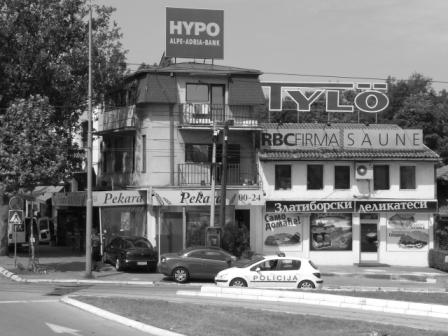
It’s hard to know what to write to describe Belgrade. It is not a particularly beautiful city (although there are certainly streets and individual buildings that I would describe as beautiful), and unlike Ljubljana there was not an overtly obvious renovation programme. Many areas appeared tired and run down, and many of the buildings were the classic communist concrete functional mega-structures imposing their presence on the city.
I have to say though, after dark, it felt like one of the safest cities I’ve been in. It had a safe feeling about it and the people we met were nothing but friendly and helpful.
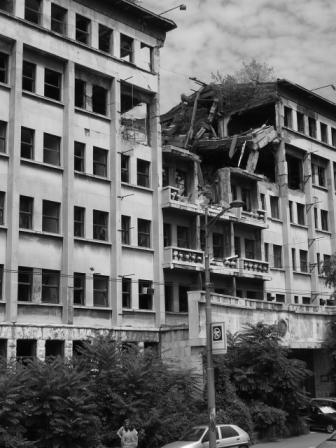
The bus tour took us around the good and bad bits of the city – and included passing the NATO bombed buildings which even after more than 10 years have not been repaired or knocked down. It was a bit startling actually; to see bomb damage, and I wondered why the city tour actually took tourists past the site of such devastation.
The three prominent bombed buildings (including the former Ministry of Defence and Party Headquarters) still sit on the road containing most of the Embassies and Government buildings. Why are they still there? Why have they not been razed to the ground? I am not sure if it’s to remind people of their turbulent past (presumably the fact that NATO bombed them rather than what Serbia did in the Balkans war), or because the cost of doing something about them is prohibitive? But, it can’t be the cost, because the location of the buildings is on such prime real estate that I just can’t understand it.
Another stop on the bus tour was Tito’s burial place and museum. It is hard to imagine that a country part of Europe and so close has had such a desperate and troubled past within my lifetime. In fact, this whole trip feels a bit like a Battlefield tour, with Croatia and Bosnia yet to come. I feel ashamed that I don’t remember more about what happened.
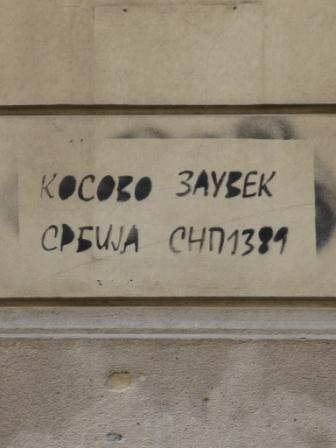
Something else that struck me about Belgrade was the amount of graffiti; not just any old graffiti either. The prevalence of political graffiti that seemed to be on every corner of every building. Most seemed to mention 1386 and Kosovo – which is the date the Serbs were defeated by the Ottoman Empire, and heralded the start of 600 years of Turkish Ottoman rule. Some of this graffiti had itself been subject to alteration by others – clearly emotions are still bubbling away on both sides of the argument.
The striking thing about the graffiti was that it was not random writing with spray cans – clearly templates had been made and used to spray the same phrases all over the city (including ‘Putin’s Watching You’ which had a really accurate picture of Putin’s face – easily recognisable even without the text).
When it came to finding lunch, we managed to pick possibly the worst restaurant in the whole of Belgrade. Of course, it wasn’t in the book which does nothing but fuel the ‘we.must.never.eat.anywhere.that.isn’t.in.the.book’ mantra that I struggle to get Nige away from. In this case however, I will concede that I had the worst chicken salad of my LIFE (dried out deep fried chicken – skin on – piled on top of cucumber swimming in deep fried chicken fat, with three triangles of cheese melted on the top – presumably grilled).
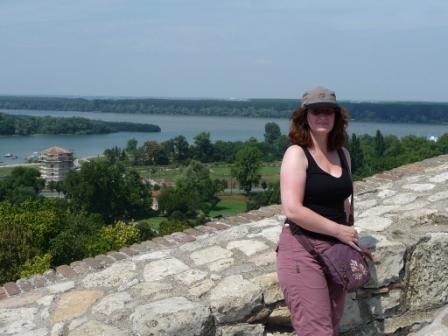
The afternoon was spent wondering around the old fortress area. This provided the most stunning views over the new city and the confluence of the Danube and Sava rivers. The Sava also flows through Ljubljana making a connection to the journey been and other journeys to come in other places.
Early evening came all too soon, and the second JAT flight we’ve taken in a little over 24 hours – this time, taking us to Tivat in Montenegro. The decent to Tivat airport was truly stunning; flying through the ‘black mountains’ that Montenegro is named for, seemingly close enough to touch, and breathtaking.


 Two Nomadic Brits